
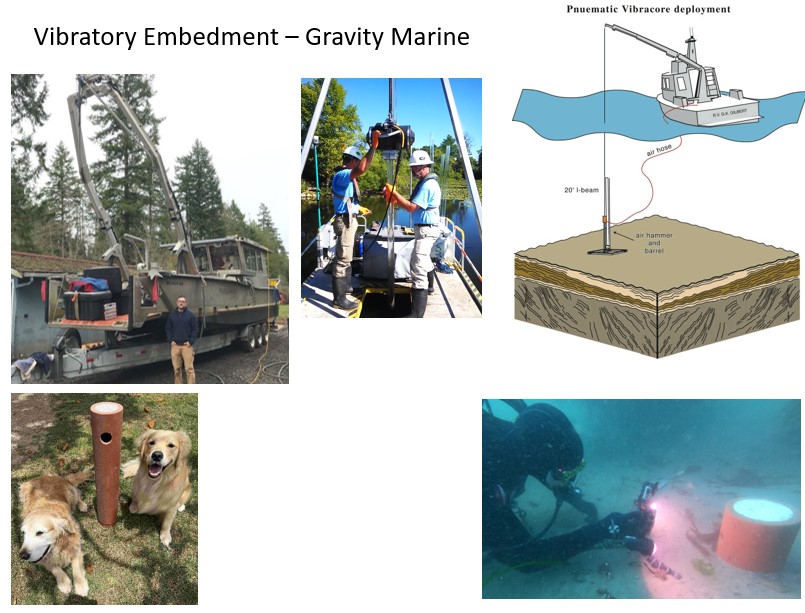
At its July 2026 Board meeting, BEACON committed up to $15,000 to fund portions of Phase 2 of the Goleta Bay Kelp Project to examine innovative octo-cylinders to expand the project within Goleta Bay. The Board authorized the Executive Director to enter into an agreement with Gravity Consulting LLC for the preliminary testing of the octo-cylinder installation methods and authorized payment for permit fees associated with the Phase 2 Goleta Bay Kelp Project.
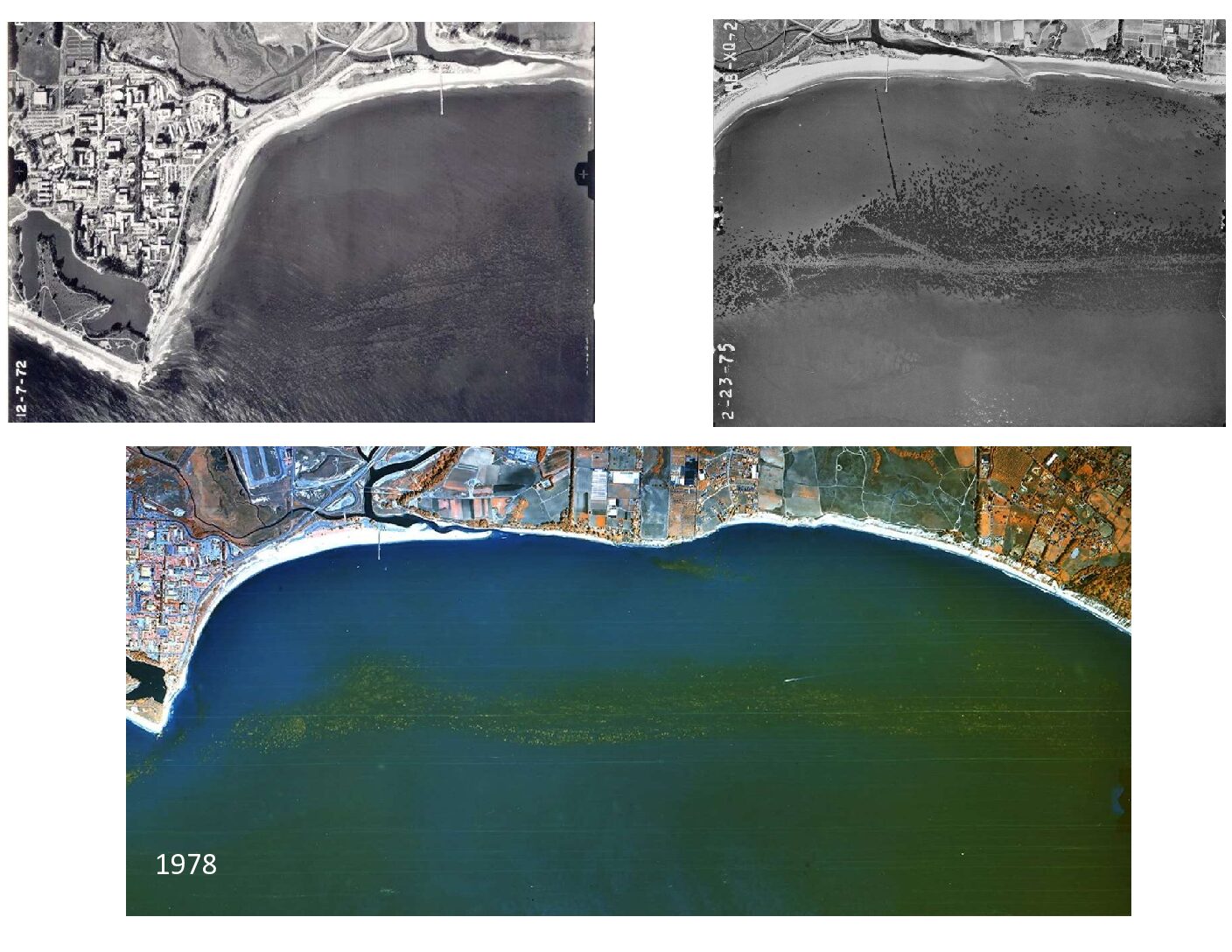
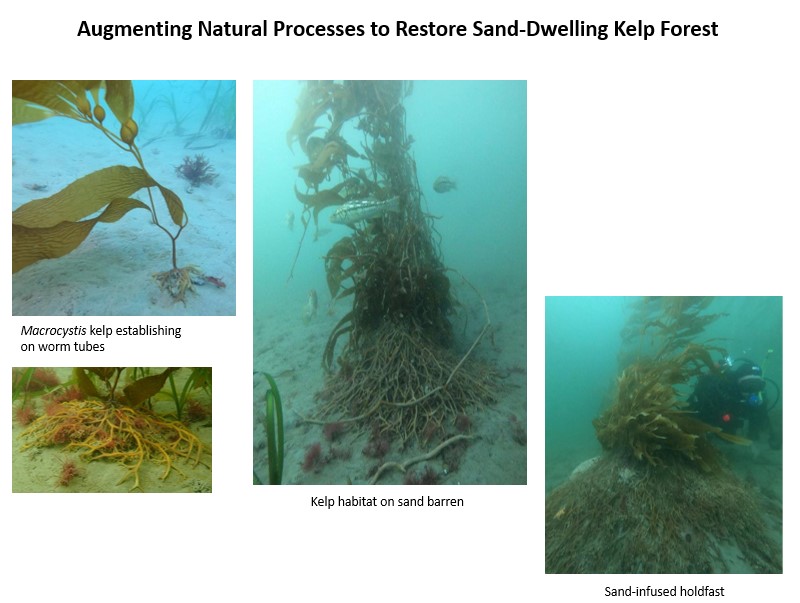
Between 2014 and 2016 BEACON secured permitting as the lead agency in delivering an innovative project to demonstrate a method to re-establish kelp in Goleta Bay. The once-prevalent and historic sand-dwelling kelp forests along the Santa Barbara Channel mainland coast were a unique feature and became dislodged from storms associated with the 1982-83 El Niño. Natural recovery has not occurred to date. Developed by Bob Kiel, the system consisted of two-inch square by thirty-inch-long granite columns that are water jetted into the sandy seabed. Each column created a hard “hold-down” structure on the sand seabed for kelp spores to attach and support resulting kelp growth.
The system showed great success in establishing new kelp growth, but observed grazing pressures by various species of snails and crabs continue to occur. The lack of structure produced by an established kelp forest to create necessary habitat and refuge for predators of the grazers appears to be a primary influence preventing re-establishment. Consequently, Mr. Kiel developed an updated iteration of the kelp anchor which has proven more successful. The modified version is referred to as the Octo-cylinder, which consists of four-inch-diameter by thirty-inch-long vitrified clay pipes that are imbedded into the sandy seabed. The cylinders are configured to create suitable refuge for octopus, a primary predator of the invertebrate kelp grazers. Restoring ecological balance within the sand barrens is essential for recovery of the sand-dwelling kelp to occur. Performing the proposed next phase of the pilot study will verify the effectiveness of this approach for restoring these unique kelp forests.
Recent Comments